Best Dog Food for a Great Dane on a Budget
General nutrition information compiled from product labels and published sources, not veterinary advice. Your veterinarian is the right person to choose a diet for your dog, especially one with a health condition.
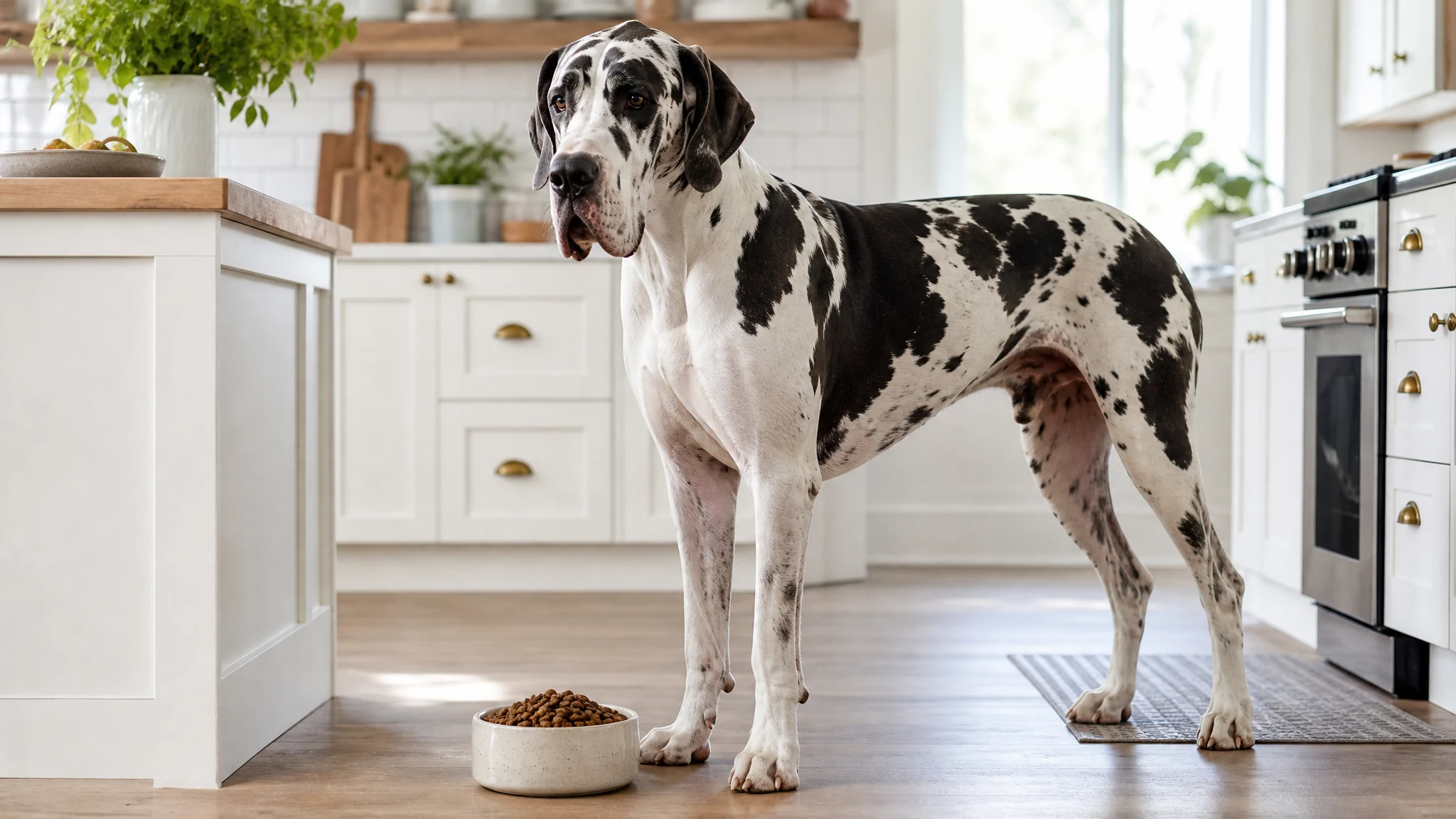
Feeding a giant dog is not cheap. A Great Dane typically weighs 110 to 175 pounds, according to PetMD, so even a modest cost difference per bag adds up fast. The goal is not the cheapest bag. It is the lowest cost for a food that fits a Great Dane's life stage and that your dog does well on.
This guide shows a step-by-step way to find the best dog food for a Great Dane without overpaying. It is based on label data only. We did not run feeding trials or taste tests, and nothing here says one food is better for your individual dog.
What You Need
- The label or brand product page for each food you are considering
- A calculator and a notebook or spreadsheet
- A measuring cup, ideally a kitchen scale
- Your dog's current weight and age
- Your veterinarian's contact details, for questions about your dog's needs
We list no prices here because they change by store and by week. You will fill in current prices yourself in Step 5.
Step 1: Start With Your Dog's Life Stage
Life stage is the first filter, and it decides which foods are even candidates.
Great Danes grow very fast. PetMD advises keeping puppies on large-breed puppy food until about 18 months. The Great Dane Club of America (GDCA) health page describes hypertrophic osteodystrophy (HOD) and panosteitis as painful bone conditions of rapid puppy growth, and says HOD is the more serious and can be deadly. A cheap food that does not suit a growing giant puppy is not a bargain.
Write down which stage your dog is in: puppy, adult, or older adult. Then drop any food that is not made for that stage.
Step 2: Read the AAFCO Statement
Every complete food carries a nutritional adequacy statement from the Association of American Feed Control Officials (AAFCO). It is the most useful line on the bag for a Great Dane owner.
Whole Dog Journal explains that growth and all-life-stages labels must say whether the food is for growth "including" or "except for" large-size dogs, meaning 70 pounds or more as an adult. A Great Dane puppy needs a statement that says "including growth of large-size dogs." Whole Dog Journal is a secondary source, so confirm the wording on your own bag or with the brand.
Among the labels we compared, these include that large-size growth wording:
- Royal Canin Giant Puppy
- Victor Hi-Pro Plus Large Breed Puppy (all life stages)
- Nom Nom Beef Mash (all life stages)
The Hill's Science Diet Puppy Large Breed label we reviewed says it provides complete and balanced nutrition for growing puppies. We did not see the large-size wording in the text we reviewed, so ask Hill's or your veterinarian about it.
Step 3: Compare the Label Data Side by Side
Build a simple table like the one below. Protein and fat are guaranteed minimums where the brand lists them. Hill's pages show dry-matter averages instead, which are not guaranteed minimums, so do not compare those numbers directly with the others.
| Food | Stage and AAFCO wording | Protein / fat | Calories per cup | First ingredients |
|---|---|---|---|---|
| Victor Hi-Pro Plus Large Breed Puppy | All life stages, including growth of large-size dogs | 30% min / 14% min | 365 | Chicken, chicken meal, brown rice, millet, sorghum |
| Royal Canin Giant Puppy | Growth, including large-size dogs; giant puppies up to 8 months | 32% min / 12% min | 338 | Chicken by-product meal, brewers rice, wheat gluten, brewers rice flour, corn |
| Hill's Science Diet Puppy Large Breed | Growth (feeding tests); large breed puppies up to 18 months | Avg 26.7% / 15.4% dry matter | 387 | Chicken, brown rice, oats, chicken meal, barley |
| Royal Canin Giant Adult | Adult maintenance | 26% min / 18% min | 427 | Chicken by-product meal, brewers rice, chicken fat, brown rice, corn protein meal |
| Royal Canin Great Dane Adult | Adult maintenance; purebred Great Danes 24 months and older | 21% min / 23% min | 390 | Chicken fat, chicken by-product meal, tapioca, brewers rice, corn |
| Hill's Science Diet Adult Large Breed | Adult maintenance (feeding tests) | Avg 23.8% / 15% dry matter | 365 | Chicken, barley, brown rice, brewers rice, wheat |
For a wider look at more formulas, see our label-by-label comparison of dog foods for Great Danes.
Step 4: Look at Ingredients Without Falling for Marketing
The first five ingredients tell you what the recipe is built from, but they do not rank quality. A named meat first can sound better than a by-product meal or a grain, yet the label alone does not tell you how a dog will do on it. Be skeptical of front-of-bag claims and judge the food on its statement, calories and ingredient list.
A note on grain-free: the FDA investigated a possible link between certain diets and canine dilated cardiomyopathy (DCM). Its latest update on that page is dated December 23, 2022, and it says no dietary cause has been established and that the issue is complex and may involve multiple factors. The GDCA health page says DCM is suspected to be inherited in Great Danes. All the foods in the table above are not grain-free, but diet questions about heart health belong with your veterinarian.
Step 5: Work Out the Real Cost Per Day
The price on the bag is only half the math. Calories per cup differ a lot, so the same cup count costs different amounts.
- Find the bag price and the bag weight on the brand's page or in the store.
- Find the calories per cup on the label. In the table, that ranges from 338 to 427 for the dry foods.
- Use the label's feeding guide as a starting point to see how many cups your dog would be fed per day, then multiply cups by calories per cup.
- Divide the bag price by the total calories in the bag, then multiply by your dog's daily calories.
A food with more calories per cup may cost more per bag yet need fewer cups. Only your own numbers will show which works out cheaper.
Feeding guides are starting points. Royal Canin's and Hill's pages say to adjust amounts to keep your dog at a healthy weight, and Hill's suggests asking your veterinarian if you are unsure.
Step 6: Plan Meals Around Bloat Risk
The GDCA health page calls bloat (gastric dilatation-volvulus, or GDV) the number one killer of Great Danes. It says feeding multiple small meals and avoiding vigorous exercise around mealtimes may reduce risk, and that a prophylactic gastropexy is something to discuss with a vet. Royal Canin's Great Dane Adult page also advises splitting the daily ration into at least two meals.
This costs nothing, so it is the cheapest safety step on the list. No food, at any price, is shown to prevent bloat.
Step 7: Switch Foods Carefully and Track Results
Once you pick a food, keep notes for the first several weeks: body condition, stool quality, energy and appetite. Ask your veterinarian before changing foods, and bring your notes to checkups. If you are changing foods, mixing the new food in gradually is common practice, and your veterinarian can advise on timing for your dog.
Tips to Keep Costs Down
- Compare cost per day, not cost per bag.
- Check the brand's own page for current feeding guides and any updates to the recipe.
- Store dry food in a cool, dry place, so a large bag is used up before it goes stale.
- Keep your Great Dane lean. Overfeeding wastes food, and extra weight is a cost of its own.
- Use treats sparingly and count them toward daily calories.
Common Mistakes to Avoid
- Feeding adult food to a growing puppy. Check for the large-size growth wording.
- Switching adult food too soon. PetMD puts adulthood at about 18 months, while Royal Canin's breed formula is labeled for dogs 24 months and older. Ask your veterinarian when to move on.
- Choosing by price alone. A food that does not fit your dog can cost more in the end.
- Adding supplements to a complete food without advice. Ask your veterinarian first.
- Assuming fresh or boutique means better. Fresh foods such as Freshpet and Nom Nom list their AAFCO statements on their own pages, and those are the facts to compare. Check the brand pages for current prices and pack sizes.
What Results to Expect
A food that matches your dog's life stage and that you can afford to feed consistently may help support steady growth, a healthy weight and good day-to-day condition. Results vary from dog to dog, and no food is guaranteed to prevent or treat hip dysplasia, DCM, bloat or any other condition. The GDCA describes hip dysplasia as inherited with multi-factorial expression. Your veterinarian decides what is right for an individual dog, including any prescription diet.
Sources
- Great Dane Club of America, Health page
- PetMD, Great Dane breed page
- Whole Dog Journal, In the Fine Print: Nutritional Adequacy Statements
- FDA CVM, Investigation into Potential Link between Certain Diets and Canine DCM
- Royal Canin, Great Dane Adult product page
- Victor Pet Food, Hi-Pro Plus Large Breed Puppy
- Hill's Pet Nutrition, Science Diet Adult Large Breed