Great Dane Dog Food Recommendations: Fresh and Subscription Options
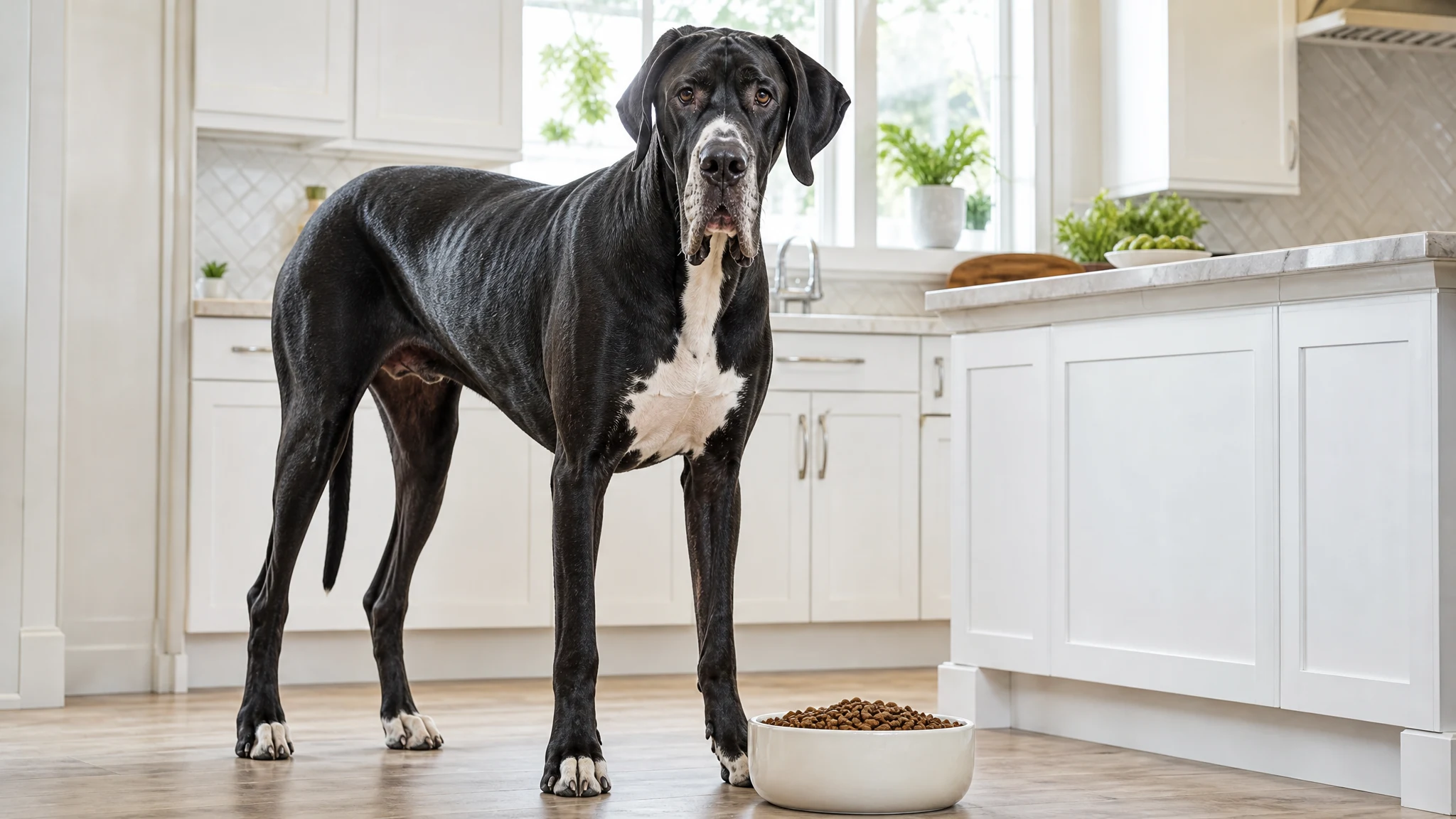
General nutrition information compiled from product labels and published sources, not veterinary advice. Your veterinarian is the right person to choose a diet for your dog, especially one with a health condition.
Fresh foods look appealing in a giant-breed household. The bags and tubs are pretty and the marketing is warm. But a Great Dane's needs are specific, and a front label tells you very little.
This guide shows you how to judge a fresh or delivery-style food using label data only. It also walks through the fresh options we have label details for. We compared published label data. We did not run feeding trials or taste tests, and nothing here is a verdict on how a food works in a real dog.
What You Need Before You Start
- Your dog's age and current weight. The Great Dane breed averages 110 to 175 pounds and 28 to 32 inches tall, according to PetMD.
- The full product page for each food you are considering, including the nutritional adequacy (AAFCO) statement, ingredient list, guaranteed analysis and calories.
- A notepad or spreadsheet with one row per food.
- Your veterinarian's contact details, because the final call on any diet belongs to them.
- Questions for each brand about delivery plans, pricing and cancellation. We do not have those details, so check with the brand.
Step 1: Decide Which Life Stage You Are Shopping For
Great Danes grow very fast. PetMD, quoting the Great Dane Club of America (GDCA), advises large-breed puppy food during growth. It puts adulthood at about 18 months and advises keeping puppies on large-breed puppy food until then. PetMD is a secondary source, so ask your veterinarian when to switch your own dog.
The GDCA health page also describes two painful bone conditions of rapid puppy growth, HOD and panosteitis. Diet is one reason to take puppy food seriously, and your veterinarian can explain how it applies to your puppy.
Write down your dog's stage: puppy, adult or older adult. Every later step depends on it.
Step 2: Read the Adequacy Statement First
This one sentence matters more than any photo or slogan. Whole Dog Journal explains that growth and all-life-stages labels must say whether the food is for growth "including" or "except for" large-size dogs, meaning dogs of 70 pounds or more as adults. A Great Dane puppy needs the "including growth of large-size dogs" wording. Whole Dog Journal is a secondary source, so confirm with your veterinarian.
Here is how the fresh foods we have label data for read:
- Nom Nom Beef Mash: all life stages, including growth of large size dogs (70 lb or more as an adult).
- Freshpet Vital Large Breed (Chicken, Beef, Egg & Salmon with Pumpkin & Spinach): formulated for all life stages. The statement we have does not include the large-size growth wording, so a puppy owner should check the current label and ask the brand.
- Freshpet Large Dog Multi-Protein Recipe: adult maintenance only. It is not a puppy food.
Step 3: Compare Calories Per Cup
Giant dogs eat a lot, so calorie density affects how many cups you scoop and how much storage you need. The label figures are:
| Food | Form | Calories | Stated minimum protein / fat |
|---|---|---|---|
| Freshpet Vital Large Breed | Fresh | 337 kcal per cup | 20% / 14% |
| Freshpet Large Dog Multi-Protein | Fresh | 348 kcal per cup | 20% / 14% |
| Nom Nom Beef Mash | Fresh | 201 kcal per cup | 8% / 5% |
Do not read the protein and fat numbers as a quality ranking. Fresh foods hold a lot of moisture, and these are as-fed minimums. That makes them hard to compare with dry food, and even a little hard to compare with each other. A lower cup calorie count also means a bigger volume of food for the same energy.
Step 4: Read the First Five Ingredients
The first ingredients are listed by weight, which gives a rough picture of what the recipe is built on. The label data shows:
- Freshpet Vital Large Breed: chicken, beef, egg, salmon, beef liver.
- Freshpet Large Dog Multi-Protein: chicken, egg, beef, salmon, beef liver.
- Nom Nom Beef Mash: ground beef, russet potatoes, eggs, carrots, peas.
Be skeptical of any ingredient-list shortcut. An ingredient list cannot tell you whether a food suits an individual dog. The grain-free status of these fresh foods is not confirmed in our label data, so check the brand page if that matters to you.
The FDA has looked into a possible link between certain diets and canine dilated cardiomyopathy (DCM). Its latest update on the page is dated December 23, 2022. The FDA said it does not plan more public updates until there is meaningful new scientific information, and that no dietary cause has been established. The GDCA says DCM is suspected to be inherited in the breed. If heart health worries you, talk to your veterinarian about it. Do not pick a food on that worry alone.
Step 5: Check the Feeding Guide as a Starting Point
Label guides are starting points. Your dog's body condition, activity and your veterinarian's advice should drive the real amount.
- The Freshpet Vital Large Breed guide we have lists 2 1/2 to 3 cups per day for dogs at 51 to 65 pounds. That is well below Great Dane size, so read the full chart on the brand page for your dog's weight.
- The Freshpet Large Dog Multi-Protein guide lists 3 1/2 cups per day for dogs of 81 pounds and up, plus 3/4 cup for each additional 25 pounds over 80. It can be fed as one meal or split into two.
- Nom Nom says its daily recommendations are only a guide and may vary with age, weight and activity level.
That brings up meal timing. The GDCA calls bloat (gastric dilatation-volvulus, or GDV) the number one killer of Great Danes. It says feeding multiple small meals and avoiding vigorous exercise around mealtimes may reduce risk. It also says a prophylactic gastropexy is an option to discuss with a vet. Some labels allow one daily meal, but for a Great Dane, splitting the day's food is the more cautious choice. Ask your veterinarian.
Step 6: Compare Against Dry Options
Fresh is one choice among several. Some owners want to see how a delivery-style food stacks up against a breed-specific kibble. For example, Royal Canin's Great Dane Adult dry food is a breed formula for purebred Great Danes 24 months and older. It lists 21% minimum protein, 23% minimum fat and 390 kcal per cup, with a large, textured kibble. Its label says the daily ration should be given in at least two meals to help reduce the risks of gastric dilation-volvulus.
For a wider look across dry, wet and fresh foods, see our label-by-label comparison of dog foods for Great Danes.
Step 7: Ask the Brand About Delivery and Plans
We do not have verified details on how any of these brands run delivery plans, so do not assume. Before you commit, ask each brand:
- What it costs for your dog's size, and whether price changes with weight.
- How shipments are packed and how much freezer or fridge space they need.
- How to pause, skip or cancel.
- Which recipes fit your dog's life stage.
A giant dog can eat through a box quickly. Do the math on volume with the feeding guide before you buy.
Step 8: Take Your Shortlist to Your Veterinarian
Bring the label pages. Ask whether the foods suit your dog's age, weight, body condition and health history. Prescription diets are something only a veterinarian prescribes, and no commercial food on this page claims to prevent or treat any condition.
Step 9: Switch Gradually and Watch
Change foods over several days by mixing the new food with the old, unless your veterinarian says otherwise. Watch appetite, stools, energy and body condition. Weigh your dog regularly and adjust with your veterinarian.
Tips and Common Mistakes
- Trusting the bag size or breed photo. Large-breed marketing is not the same as a large-breed adequacy statement.
- Feeding an adult formula to a growing puppy. Check the statement for the large-size growth wording.
- Comparing fresh and dry protein percentages directly. Moisture makes the numbers misleading.
- Using a feeding chart row meant for a smaller dog. Find your dog's actual weight range.
- Feeding one huge meal. Ask about splitting meals to lower bloat risk.
- Adding supplements to a complete food without asking. Your veterinarian should guide that decision.
- Switching because of a trend. The FDA says no dietary cause of DCM has been established.
What Results to Expect
A food that fits well may help your dog hold a steady weight, keep a healthy appetite and produce consistent stools. Those are things to watch for, not promises. A dog's response depends on genetics, age, activity and health. Great Danes live about 7 to 10 years according to PetMD, so careful monitoring over the long run matters more than any one bag or box. If something seems off, call your veterinarian.
Quick Brand Pages
Verify current label details on the brand's own pages:
- Freshpet Vital Large Breed
- Freshpet Large Dog Multi-Protein Recipe
- Nom Nom Beef Mash
- Royal Canin Great Dane Adult
Sources
- Great Dane Club of America, Health page
- PetMD, Great Dane breed page
- FDA CVM, Investigation into Potential Link between Certain Diets and Canine DCM
- Whole Dog Journal, In the Fine Print: Nutritional Adequacy Statements
- Freshpet, Vital Large Breed product page
- Freshpet, Large Dog Multi-Protein Recipe product page
- Nom Nom, Beef Mash product page
- Royal Canin US, Great Dane Adult product page