Human Foods Great Danes Should Never Eat
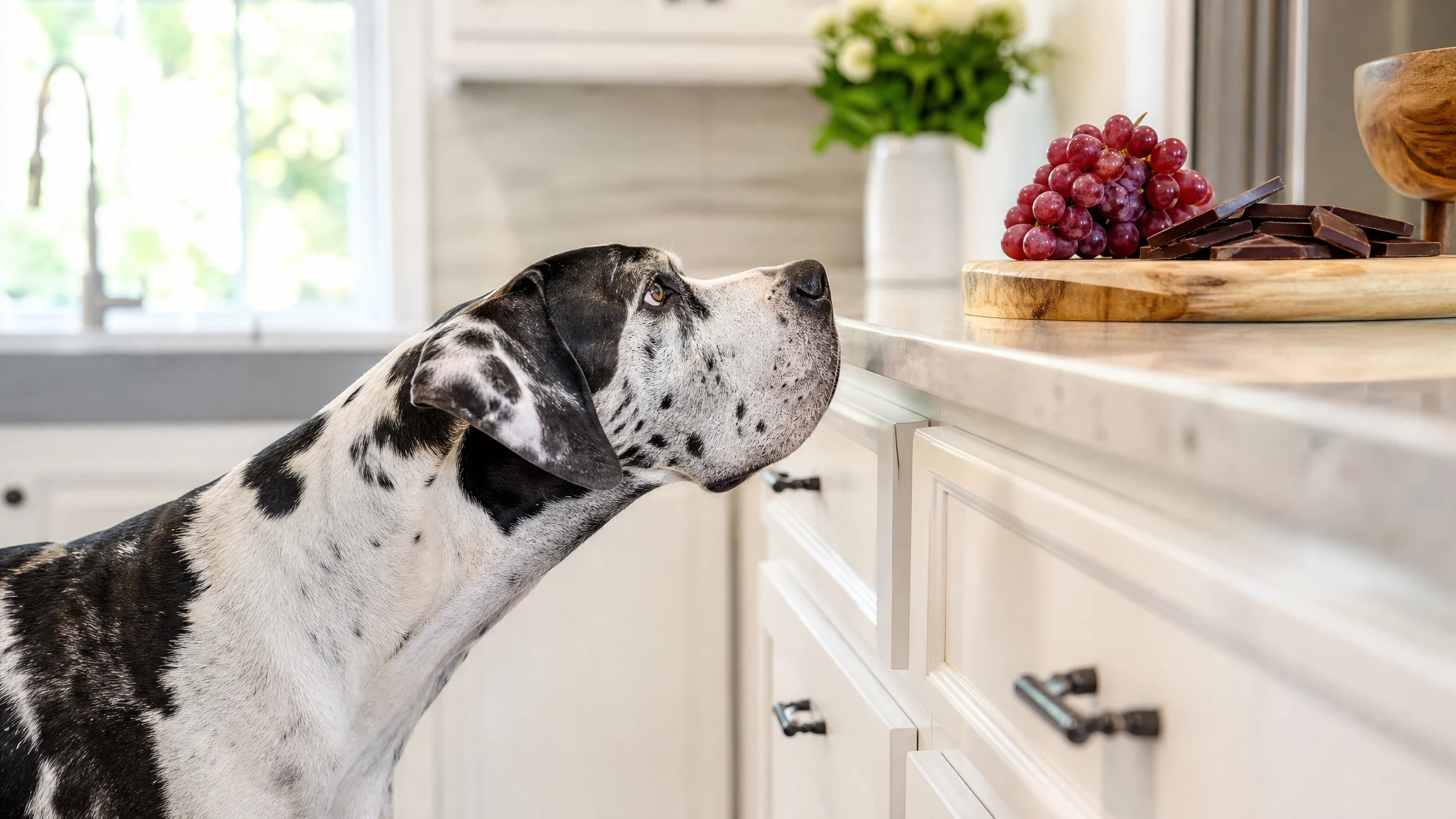
General nutrition information compiled from product labels and published sources, not veterinary advice. Your veterinarian is the right person to choose a diet for your dog, especially one with a health condition.
A Great Dane is so big that a stray bite of table food can seem harmless. Size does not make a toxic food safe, and a giant dog can still eat enough of the wrong thing to get sick.
This FAQ covers human foods dogs can't eat, grouped by theme. The toxic foods named here come from the ASPCA Animal Poison Control list of people foods that are harmful to dogs. Breed points come from the Great Dane Club of America (GDCA). Your veterinarian decides what is right for your individual dog.
Sweets, Snacks and Hidden Sweeteners
Can Great Danes eat chocolate?
No. The ASPCA lists chocolate as toxic to dogs because it contains compounds called methylxanthines. Dark chocolate and baking chocolate are generally considered more concerning than milk chocolate, but none of it is a safe treat.
What is xylitol, and why does it matter?
Xylitol is a sweetener used in some sugar-free gum, candy, baked goods and even some peanut butters. The ASPCA lists it as toxic to dogs. Read the ingredient list on anything you plan to share, especially products marked sugar-free.
Is coffee or tea a problem?
Yes. The ASPCA lists caffeine as harmful to dogs, and that includes coffee grounds, tea bags and energy drinks. Keep cups and used grounds out of reach of a tall dog who can counter-surf.
Are cookies, cake and other sweets okay in small bites?
Plain sugary baked goods are not on the ASPCA toxic list by themselves, but they add calories and no real benefit. Many also contain chocolate, raisins or xylitol, which are the real dangers. It is simplest to skip them.
Fruits, Vegetables and Nuts
Can Great Danes eat grapes or raisins?
No. The ASPCA lists grapes and raisins as toxic to dogs and notes they can cause kidney problems. This also applies to foods that contain them, such as trail mix and some baked goods.
What about onions and garlic?
The ASPCA lists onions, garlic, chives and leeks as harmful to dogs because they can damage red blood cells. Cooked, raw and powdered forms all count. Check the labels on sauces, gravies and baby food, since onion and garlic powder are common ingredients.
Are macadamia nuts dangerous?
Yes. The ASPCA lists macadamia nuts as toxic to dogs, and they can cause weakness and other symptoms. Cookies and snack mixes that include them are also off limits.
Can Great Danes eat avocado or other nuts?
The ASPCA advises against avocado for dogs, and the pit is also a choking and blockage risk. Other nuts are high in fat, and some, such as walnuts, can grow mold that is harmful. Peaches, plums and other fruit pits are a blockage risk too.
Drinks, Dough, Bones and Fatty Foods
Is alcohol ever safe for a Great Dane?
No. The ASPCA lists alcohol as dangerous to dogs. This includes beer, wine, spirits and food made with alcohol. Never leave open glasses where a dog can reach them.
Can Great Danes eat raw bread dough?
No. The ASPCA warns that raw yeast dough can expand in the stomach and produce alcohol as it ferments. For a breed already at risk for stomach problems, this is one to keep well out of reach.
Are cooked bones a good chew?
Cooked bones can splinter and cause choking or injury to the mouth and gut. Cooked rib and poultry bones are the usual concern. Ask your veterinarian which chews suit your dog.
Is it okay to share fatty trimmings or salty snacks?
The ASPCA advises against fatty scraps, which can upset the stomach and may contribute to pancreatitis. It also lists very salty foods such as chips and pretzels as a concern. Your dog's regular food is a better place to spend calories.
Is milk or cheese a good treat?
Many dogs have trouble digesting dairy, and it can lead to loose stools. It is not on the main toxic list, but it is not a useful treat either. Ask your veterinarian before making it a habit.
Breed-Specific Feeding Concerns
Why does feeding matter so much for Great Danes?
The Great Dane Club of America calls bloat, also called gastric dilatation-volvulus (GDV), the number one killer of the breed. The GDCA says feeding several small meals and avoiding vigorous exercise around mealtimes may reduce risk. A big plate of leftovers or a stolen turkey carcass is the opposite of that approach.
Does table food affect puppy growth?
Great Danes grow very fast, and the GDCA describes painful bone conditions of rapid growth, including HOD and panosteitis. Large-breed puppy food is advised until about 18 months, according to PetMD, a secondary source. Extra table food can disrupt a balanced diet, so talk to your veterinarian before adding anything.
Can a human-food diet or a grain-free diet protect my dog's heart?
No food is proven to do that. The GDCA says dilated cardiomyopathy (DCM) is suspected to be inherited in the breed, and an echocardiogram is how it is confirmed. The FDA says no dietary cause of DCM has been established, so ask your veterinarian about heart screening rather than relying on a diet claim.
Safe Snacks
What can Great Danes eat as a treat?
Many owners use plain carrot pieces or green beans, or small bits of plain cooked lean meat with no seasoning, oil or onion. Introduce any new food slowly and in small amounts, and check with your veterinarian first. Treats should stay a small part of the day's food.
Can Great Danes eat peanut butter?
Plain peanut butter is a common treat, but only if the label does not list xylitol. Check every jar, because formulas change. Use only a small amount.
Should I rely on treats instead of a complete food?
No. Complete and balanced nutrition should come from a dog food with an AAFCO statement that fits your dog's life stage. For a Great Dane, that includes checking that the statement covers growth of large-size dogs for puppies. Our label-by-label dog food comparison shows how we compared label data. We did not run feeding trials or taste tests.
If Your Dog Eats Something Toxic
What should I do right away?
Call your veterinarian or an emergency clinic, or contact ASPCA Animal Poison Control, right away. Do not wait for symptoms to appear. Check the ASPCA website for its current contact details and any consultation fee.
What information should I have ready?
Know what your dog ate, roughly how much, when it happened, and your dog's weight. Keep the package or label so you can read the ingredients aloud. Do not induce vomiting unless a veterinarian or poison control tells you to.
When is it an emergency even without a known poison?
A swollen, tight belly, unproductive retching, restlessness or sudden collapse in a Great Dane should be treated as a possible bloat emergency. Go to a veterinarian immediately. The GDCA health page is a good place to learn about bloat and the option of a preventive gastropexy to discuss with your veterinarian.