Dog Food for a Great Dane Puppy: Switching Brands Safely
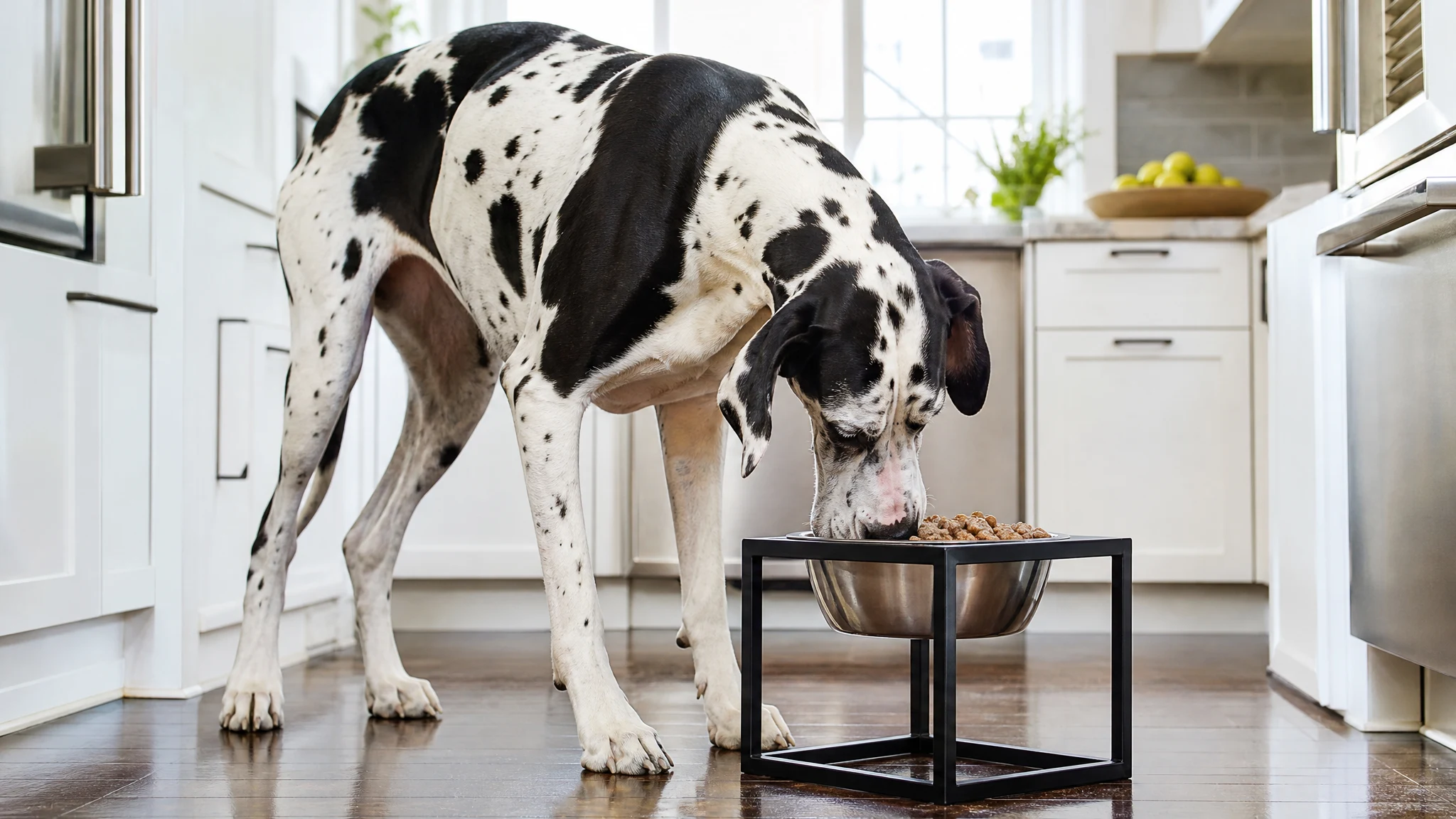
General nutrition information compiled from product labels and published sources, not veterinary advice. Your veterinarian is the right person to choose a diet for your dog, especially one with a health condition.
Changing your puppy's food sounds simple. With a giant breed, it deserves a little more care. Great Danes grow very fast, and the Great Dane Club of America (GDCA) lists painful growth-related bone conditions and bloat among the breed's health concerns. A calm, gradual switch keeps one more variable out of the picture.
This guide walks through choosing the new food, reading its label, and moving your puppy over step by step. It is a how-to, not a verdict on any brand.
How we compared foods
We compared label data published by the brands: the AAFCO statement, ingredient list, guaranteed analysis and calories. We did not run feeding trials or taste tests, and we are not ranking foods. Use the label examples below as a model for reading any bag.
What you will need
- The new food, and enough of the old food to last about two weeks.
- A measuring cup or, better, a kitchen scale. Giant puppies grow quickly, so eyeballed scoops drift.
- The bag or website label for both foods, so you can compare calories per cup.
- A notebook or phone note to log stools, appetite and energy each day.
- A separate container for mixing each meal.
- Your veterinarian's phone number, in case something goes wrong.
Step 1: Decide whether you really need to switch
Switching is reasonable when your puppy is outgrowing a life stage, the current food is not agreeing with them, or your vet suggests a change. It is less sensible just because a new bag has better marketing.
If the current food is working, your puppy has firm stools and steady growth, and the label suits a giant breed, there may be no reason to change. Ask your vet if you are unsure.
Step 2: Check the AAFCO statement for large-size growth
This is the most important label check for a Great Dane puppy. According to Whole Dog Journal, growth and all-life-stages foods must state whether they are for growth "including" or "except for" large-size dogs, meaning 70 pounds or more as an adult. A Great Dane needs a statement that says it includes growth of large-size dogs.
Here is how some label statements read:
- The Royal Canin Giant Puppy label says it meets AAFCO nutrient profiles for growth including growth of large size dogs (70 lb. or more as an adult). Royal Canin lists it for giant breed puppies up to 8 months.
- The Victor Hi-Pro Plus Large Breed Puppy label says it meets AAFCO profiles for all life stages including the growth of large size dogs.
- The Hill's Science Diet Puppy Large Breed Chicken & Brown Rice Recipe page lists it for large breed puppies up to 18 months. Its AAFCO statement cites animal feeding tests for growing puppies.
Read the statement on the exact bag you are buying. Formulas change, and the brand's own page is the place to confirm. If the wording is unclear, ask the brand.
Step 3: Compare calories and the guaranteed analysis
Calories per cup differ between foods, so the same scoop can mean a different amount of energy. For example, the brand pages list 338 kcal per cup for Royal Canin Giant Puppy, 365 kcal per cup for Victor Hi-Pro Plus Large Breed Puppy, and 387 kcal per cup for Hill's Puppy Large Breed.
Protein and fat minimums vary too. Royal Canin lists 32 percent protein and 12 percent fat minimums for its giant puppy food. Victor lists 30 percent and 14 percent. Hill's shows averages on a dry matter basis rather than guaranteed minimums, so you cannot compare it directly with the others.
A higher number is not automatically better. These figures are a way to see how two foods differ, and a way to adjust portions when you change.
Step 4: Plan the schedule
A common approach is to move over about seven to ten days, and some dogs with sensitive stomachs do better over two weeks. Brands and vets may suggest different timelines, so follow your vet's advice if it differs. Here is a typical pattern:
| Days | Old food | New food |
|---|---|---|
| 1 to 3 | About 75 percent | About 25 percent |
| 4 to 6 | About 50 percent | About 50 percent |
| 7 to 9 | About 25 percent | About 75 percent |
| 10 onward | None | 100 percent |
Do not move to the next stage until stools are firm and your puppy is eating well. Staying at one stage for an extra few days is fine.
Step 5: Set the amount and meal schedule
Use the new bag's feeding guide as a starting point, based on your puppy's current weight, age and activity level. Many brand pages link to a feeding calculator instead of a fixed chart, so check the brand's page for the food you chose. Our Great Dane feeding chart by age goes deeper on amounts as your puppy grows.
When the two foods differ in calories per cup, adjust the volume so daily calories stay roughly steady. Weigh the food if you can.
On meal frequency, the GDCA Health page says feeding multiple small meals and avoiding vigorous exercise around mealtimes may reduce the risk of bloat, also called GDV. Royal Canin's Great Dane adult page also says to give the daily ration in at least two meals to help reduce that risk. Splitting your puppy's daily amount into several meals, and keeping the same meal times during the switch, fits that advice.
Step 6: Mix, serve and watch
- Measure the old and new food for one meal using the table above.
- Stir them together well so your puppy cannot pick out the old food.
- Serve at the usual time, in the usual place, and let your puppy eat calmly.
- Keep your puppy quiet for a while after the meal, with no hard play or racing around.
- Record the meal, the stool quality and the energy level in your log.
- Repeat at each meal for the stage you are on.
Step 7: Know when to stop and call your vet
Mild soft stool during a switch is not unusual. If it continues, go back to the previous stage for a few days and then advance more slowly.
Call your vet if your puppy has repeated vomiting, ongoing diarrhea, refuses food, or seems tired or in pain. Contact a vet or emergency clinic right away if you see a swollen, tight belly, repeated unproductive retching, drooling or restlessness. These can be signs of bloat, which the GDCA calls the number one killer of Great Danes.
Tips for a smoother switch
- Switch when life is calm. Avoid travel, boarding or vaccines on the same days if you can.
- Keep treats and chews the same during the transition so you can tell what is affecting the stool.
- Weigh your puppy regularly and share the numbers with your vet. Rapid growth is a concern in this breed, and the GDCA lists HOD and panosteitis as painful bone conditions of fast puppy growth.
- Store the old food until the switch is finished, in case you need to step back.
- Ask your vet before adding anything to the bowl, including supplements and extra calcium. Do not guess at amounts.
Common mistakes to avoid
- Switching all at once. A sudden change is a common cause of an upset stomach.
- Choosing an adult or "except for large-size growth" food too early. PetMD advises keeping Great Dane puppies on large-breed puppy food until about 18 months. Ask your vet about the right time for your dog.
- Copying the cup amount across brands. Calories per cup differ, as shown above.
- Judging by the front of the bag. Words like "natural" or "premium" are not nutrition data. The AAFCO statement and guaranteed analysis are.
- Treating a food as a cure. No food prevents or treats hip dysplasia, bloat or heart disease. Your veterinarian decides what suits an individual dog.
- Letting the puppy gulp and run. Exercise right after meals is exactly what the GDCA advises against.
A note on heart disease and food choice
The GDCA says dilated cardiomyopathy (DCM) is suspected to be inherited in Great Danes. The FDA's investigation into diets and DCM is still the main public reference. Its last update, dated December 23, 2022, says no dietary cause has been established. Its earlier 2019 update described the question as a complex scientific issue that may involve multiple factors. If you are worried about your puppy's heart, talk to your vet instead of making changes on your own.
What to expect
With a gradual switch, many puppies keep eating normally and have stools that stay mostly firm. Some have a few softer days. Appetite, energy and coat can change over weeks, but many factors are involved, so no food can promise a particular result.
Keep the log for a few weeks after the switch. If something looks wrong, show it to your vet. They can advise on amounts for a puppy with a health condition and on when to move to adult food.
Sources
- Great Dane Club of America, Health page
- PetMD, Great Dane breed page
- Whole Dog Journal, In the Fine Print: Nutritional Adequacy Statements
- FDA CVM, Investigation into Potential Link between Certain Diets and Canine DCM
- Royal Canin, Giant Puppy product page
- Victor Pet Food, Hi-Pro Plus Large Breed Puppy
- Hill's Pet Nutrition, Science Diet Puppy Large Breed