Great Dane Puppy Food: Wet, Dry or Mixed Feeding
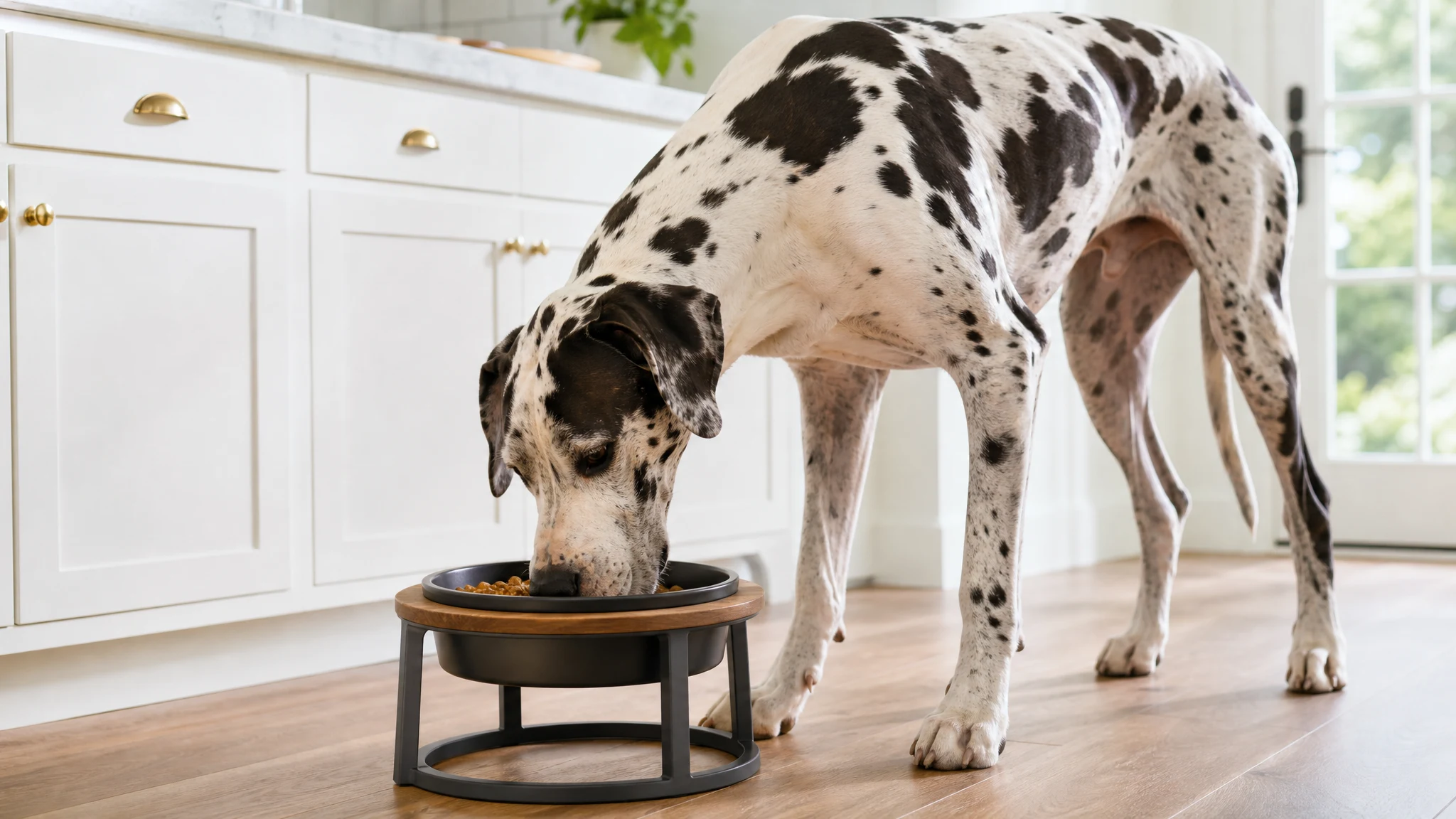
General nutrition information compiled from product labels and published sources, not veterinary advice. Your veterinarian is the right person to choose a diet for your dog, especially one with a health condition.
Choosing great dane puppy food is mostly a question of two things: what the label says about growth, and how you serve it. Dry, wet and mixed feeding can all work when the food is complete and balanced for a giant puppy. This guide walks through how to pick a format, set up meals and avoid common slips.
A note on method. We compared label data published on each brand's own product page. We did not run feeding trials or taste tests, and we have not fed these foods to dogs. Treat the comparisons as a way to read labels, not as a ranking.
Why format matters for a giant breed puppy
PetMD lists adult Great Danes at an average of 110 to 175 pounds and 28 to 32 inches tall. Getting there takes very fast growth. The Great Dane Club of America (GDCA) health page describes hypertrophic osteodystrophy (HOD) and panosteitis as painful bone conditions of rapid puppy growth, and says HOD is the more serious and can be deadly.
No food prevents or treats these conditions. What a label can tell you is whether the food was formulated for large-size growth. A veterinarian decides what is right for your individual puppy.
The GDCA also calls bloat (gastric dilatation-volvulus, or GDV) the number one killer of Great Danes. It says feeding several small meals and avoiding vigorous exercise around mealtimes may reduce risk, and that a prophylactic gastropexy is an option to discuss with a vet. That makes meal structure as important as the food itself.
Materials you will need
- A puppy food whose label says it is for growth including large-size dogs (70 pounds or more as an adult).
- A measuring cup, or a kitchen scale if the brand lists weights.
- A slow-feeder or plain, stable bowl, set at a comfortable height.
- An airtight container for dry food and a lidded container for opened wet or fresh food in the fridge.
- A notebook or phone note to log meals, body condition and stool quality.
- Your vet's contact details for questions about growth and weight.
Step 1: Check the AAFCO statement first
Whole Dog Journal explains that AAFCO growth and all-life-stages statements must say whether the food is for growth "including" or "except for" large-size dogs. A Great Dane needs a statement that says it includes growth of large-size dogs. Whole Dog Journal is a secondary source, so confirm the wording on the bag or the brand's page.
Here is what the brand pages say for the puppy-relevant foods we compared:
| Food | Form | Label wording on growth | Calories |
|---|---|---|---|
| Royal Canin Giant Puppy | Dry | Growth including large-size dogs; for giant puppies up to 8 months | 338 kcal per cup |
| Victor Hi-Pro Plus Large Breed Puppy | Dry | All life stages including growth of large-size dogs | 365 kcal per cup |
| Hill's Science Diet Puppy Large Breed Chicken & Brown Rice | Dry | Complete and balanced for growing puppies; large breed puppies up to 18 months | 387 kcal per cup |
| Nom Nom Beef Mash | Fresh | All life stages including growth of large-size dogs | 201 kcal per cup |
The Hill's statement, as listed, says "growing puppies" and does not repeat the large-size wording. Ask Hill's or your vet how it applies to a Great Dane. Freshpet's Vital Large Breed is labeled for all life stages, but the wording we have does not mention large-size growth, so confirm it with the brand before using it for a puppy.
Step 2: Pick your format
Dry only
Dry food is the simplest to measure and store. Label data is also easiest to compare. Royal Canin Giant Puppy lists a 32 percent protein minimum and a 12 percent fat minimum. Victor Hi-Pro Plus Large Breed Puppy lists 30 percent protein and 14 percent fat minimums. Hill's lists dry-matter averages (26.7 percent protein, 15.4 percent fat), which are not guaranteed minimums, so do not compare them directly with the others.
Wet or fresh only
Wet and fresh foods contain more water, so the percentages on the label look lower. Nom Nom Beef Mash lists an 8 percent protein minimum and 201 kcal per cup. That is not a weaker food. It is a different moisture level. Compare calories and the AAFCO statement, not the raw percentages.
A giant puppy eating only wet or fresh food needs a lot of volume. Check the brand's feeding guide against your puppy's weight. We did not find puppy-specific canned data for the brands above, so ask the brand which wet recipe, if any, covers large-size growth.
Mixed feeding
Mixed feeding means dry food as the base with some wet or fresh food added. Many owners like it for appeal and variety. The main risk is calories. Wet food adds energy on top of the dry portion, so the dry portion should usually shrink.
If you mix, keep both foods puppy-appropriate. An adult wet food added to a puppy diet changes the overall balance. Ask your vet before blending products that carry different life-stage statements.
Step 3: Find a starting amount
Amounts depend on age, current weight and activity level. Use the brand's own feeding guide as a starting point, not a target. Royal Canin's Giant Puppy page points to a feeding calculator rather than fixed amounts. Hill's says to adjust amounts as needed to maintain optimal weight and to ask your veterinarian if unsure.
For an age-by-age overview, see our Great Dane feeding chart by age. If your puppy has any health condition, confirm amounts with your vet before you settle on a routine.
Step 4: Split the day into several meals
- Divide the daily amount into at least three meals while your puppy is young. The GDCA points to multiple small meals as a way that may reduce bloat risk.
- Keep mealtimes the same each day.
- Pick up the bowl after about 15 to 20 minutes so you can see how much was actually eaten.
- Keep play and hard exercise away from mealtimes, as the GDCA advises.
- Let your puppy rest quietly after eating.
For reference, Royal Canin's Great Dane adult page says the daily ration should be given in at least two meals to help reduce the risk of GDV. Keeping that habit from puppyhood makes the later switch easier.
Step 5: Mix wet and dry carefully
- Start with the dry portion from the feeding guide.
- Add a small spoonful of wet or fresh food and reduce the dry portion a little to offset the added calories.
- Stir it in so your puppy does not pick out only the soft food.
- Serve it right away. Refrigerate opened wet or fresh food and follow the brand's storage directions.
- Change one thing at a time so you can tell what causes any stool or appetite changes.
Step 6: Switch foods gradually
When changing brands or formats, blend the new food into the old over about a week or longer, as the brand or your vet suggests. Watch stool and appetite. If you see ongoing vomiting, diarrhea or lethargy, call your vet.
Step 7: Track growth and plan the move to adult food
Weigh your puppy regularly and note body condition. Ribs should be easy to feel without being sharply visible. If you are unsure, your vet can score body condition for you.
PetMD says a Great Dane is considered an adult at about 18 months and advises large-breed puppy food until then. No club or vet-school source confirmed that age, so ask your vet when to switch. Royal Canin's Giant Puppy formula is listed for puppies up to 8 months, while its Great Dane Adult formula is listed for purebred Great Danes 24 months and older. Check each brand's age guidance for the stage in between.
Tips
- Read the whole label, not just the front of the bag.
- Weigh or measure every meal. Eyeballing leads to drift.
- Count wet toppers and treats as part of the daily calories.
- Keep the routine calm and predictable.
- Ask the brand directly about anything the label does not state, such as kibble size.
Common mistakes to avoid
- Using an adult or "except for large-size" food for a puppy. Check the growth wording.
- Adding supplements on your own. Do not add calcium or other supplements unless your vet tells you to.
- Feeding one or two large meals. This runs against the GDCA's bloat guidance.
- Exercising right after meals. The GDCA advises avoiding vigorous activity around mealtimes.
- Comparing wet and dry percentages directly. Moisture changes the numbers.
- Chasing fast growth. A bigger puppy is not automatically a healthier one.
- Choosing food based on a DCM headline. The FDA says no dietary cause has been established and that its last update on the page is dated December 23, 2022. Talk with your vet if you are worried.
What to expect
With a suitable puppy food, measured meals and regular weigh-ins, many owners see steady appetite, firm stools and gradual weight gain. Results vary from dog to dog, and no food can promise a particular outcome for bones, joints, the heart or bloat.
The GDCA notes that DCM is suspected to be inherited in the breed and that a normal echocardiogram does not rule out later disease. Diet is one part of care, alongside veterinary checkups and health screening from your breeder.
Questions to bring to your vet
- Is the food I chose appropriate for a Great Dane puppy's growth?
- How much should I feed at my puppy's current weight and activity level?
- Is mixed feeding reasonable for my puppy?
- When should we move to an adult diet?
- Should we talk about gastropexy?
Sources
- Great Dane Club of America, Health page
- PetMD, Great Dane breed page
- Whole Dog Journal, In the Fine Print: Nutritional Adequacy Statements
- FDA CVM, Investigation into Potential Link between Certain Diets and Canine DCM
- Royal Canin, Giant Puppy Dry Dog Food
- Royal Canin, Breed Health Nutrition Great Dane Adult
- Hill's Pet Nutrition, Puppy Large Breed Chicken & Brown Rice
- Victor Pet Food, Hi-Pro Plus Large Breed Puppy
- Nom Nom, Beef Mash