Best Dog Food for a Great Dane Puppy: Calcium and Phosphorus Balance
General nutrition information compiled from product labels and published sources, not veterinary advice. Your veterinarian is the right person to choose a diet for your dog, especially one with a health condition.
Great Danes grow very fast. That is why the best dog food for great dane puppy households is usually not the one with the boldest bag, but the one whose label clearly says it is built for large-size growth. Calcium and phosphorus are a big part of that label story.
This guide walks you through reading a puppy food label step by step. It does not rank foods, and it does not tell you exact calcium numbers. Those figures should come from the brand and your veterinarian.
Why calcium and phosphorus matter for this breed
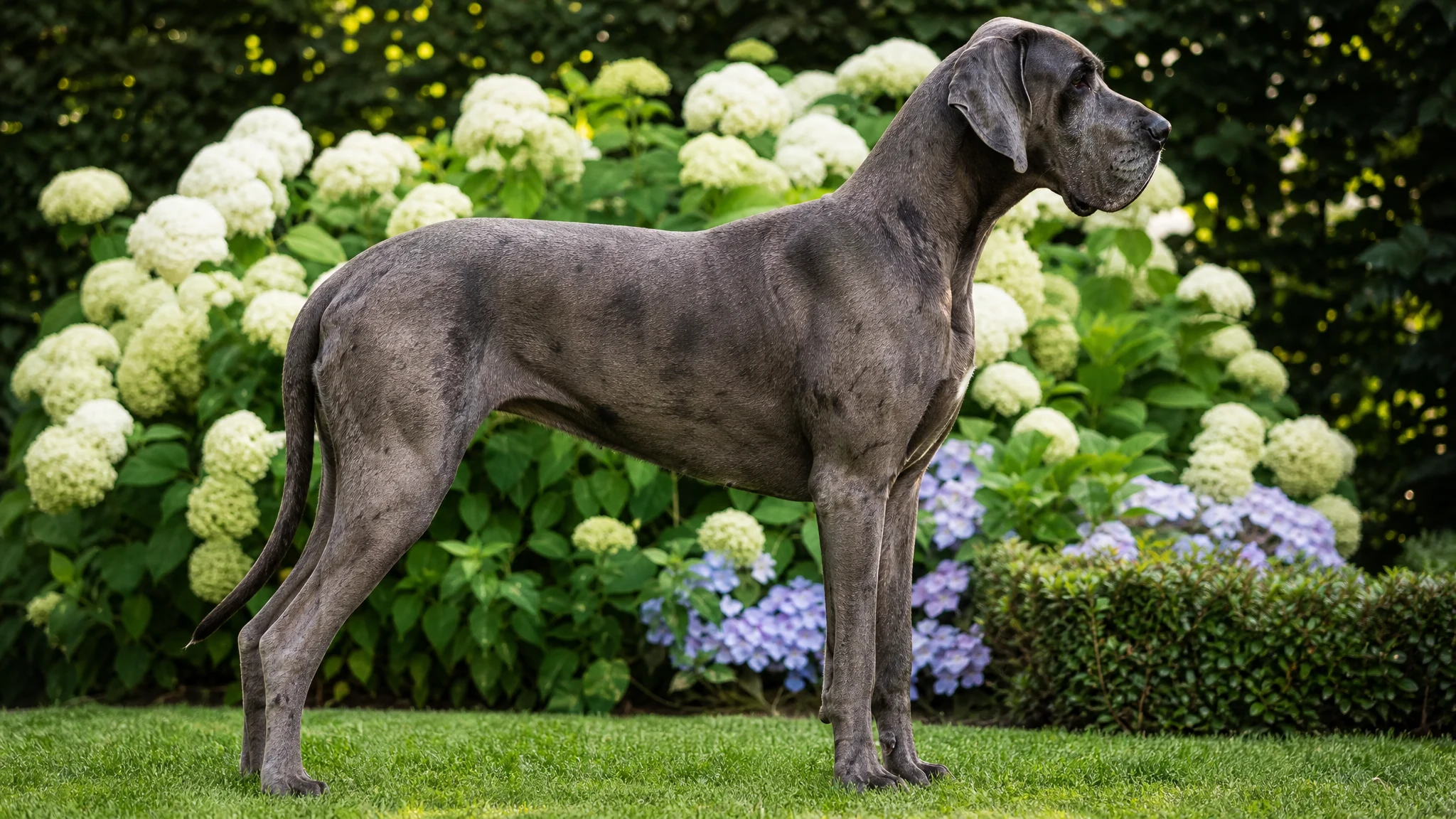
PetMD, a secondary source, describes the Great Dane as a giant breed, averaging 110 to 175 pounds and 28 to 32 inches tall. It also notes that these puppies grow very quickly and need large-breed puppy food.
The Great Dane Club of America (GDCA) Health page lists two painful bone conditions of rapid puppy growth: HOD (hypertrophic osteodystrophy) and panosteitis. The GDCA says HOD is the more serious of the two and can be deadly.
No label can promise to prevent any of these problems. What a careful owner can do is choose a food made for large-size growth, then let a veterinarian guide the details for the individual puppy.
How we compared foods
We compared label data published on each brand's own product page. We did not run feeding trials or taste tests, and we did not feed any of these foods to dogs. Treat this as a label-reading lesson, not a test result.
What you need
- The bag or the brand's product page for each food you are considering.
- The nutritional adequacy (AAFCO) statement from each label.
- The guaranteed analysis and the ingredient list.
- A kitchen scale and measuring cup for portions.
- Your puppy's current weight and age.
- Your veterinarian's contact details, for the final decision.
Step 1: Find the adequacy statement
Find the small paragraph that begins with wording like "formulated to meet the nutritional levels established by the AAFCO Dog Food Nutrient Profiles." It tells you which life stage the food is built for.
Whole Dog Journal, a secondary source, explains that growth and all-life-stages labels must say whether the food is for growth "including" or "except for" large-size dogs, meaning 70 pounds or more as an adult. A Great Dane is well above that line. Look for the wording "including growth of large-size dogs."
If a puppy food says "except for large-size dogs," or says nothing about size, set it aside for your Dane.
Step 2: Match the statement to real products
Here is how a few brands' own pages word their statements. The table repeats only what those pages say.
| Product | What the brand's statement says | Large-size growth wording? |
|---|---|---|
| Royal Canin Giant Puppy Dry | Growth, including growth of large size dogs (70 lb. or more as an adult) | Yes |
| Victor Hi-Pro Plus Large Breed Puppy | All life stages, including the growth of large size dogs (70 lb. or more as an adult) | Yes |
| Nom Nom Beef Mash | All life stages, including growth of large size dogs (70 lb or more as an adult) | Yes |
| Hill's Science Diet Puppy Large Breed Chicken & Brown Rice | Complete and balanced nutrition for growing puppies, shown through feeding tests | Not stated in the wording we reviewed. Ask Hill's. |
The Hill's page describes the food as made for large breed puppies up to 18 months, with an adult weight over 55 pounds. Because a Great Dane is far heavier than that, confirm with the brand or your veterinarian that it fits a giant breed.
You can read each statement on the brand's own pages: Royal Canin Giant Puppy, Victor Hi-Pro Plus Large Breed Puppy, Nom Nom Beef Mash and Hill's Science Diet Puppy Large Breed.
Step 3: Read the guaranteed analysis for what it can and cannot tell you
The guaranteed analysis lists minimum protein and fat, and maximum fiber. For the foods above, the brand pages list these:
- Royal Canin Giant Puppy: protein 32.0% minimum, fat 12.0% minimum, fiber 3.9% maximum, 338 kcal ME per cup.
- Victor Hi-Pro Plus Large Breed Puppy: protein 30% minimum, fat 14.0% minimum, fiber 6.0% maximum, 365 kcal per cup.
- Nom Nom Beef Mash: protein 8% minimum, fat 5% minimum, fiber 4% maximum, 201 kcal per cup. This is a fresh food with high moisture, so do not compare it directly with dry kibble.
Calcium and phosphorus are also printed in the guaranteed analysis on a bag. We could not confirm exact calcium figures from AAFCO or a veterinary school, so we are not quoting target numbers or ratios. Use the bag or the brand's customer service, and ask your veterinarian whether the numbers suit your puppy.
Step 4: Check the ingredient list without over-reading it
Ingredients are listed by weight. Here are the first five on the Royal Canin Giant Puppy label: chicken by-product meal, brewers rice, wheat gluten, brewers rice flour and corn. Victor's puppy food starts with chicken, chicken meal, brown rice, whole grain millet and whole grain sorghum.
An ingredient list does not show the calcium and phosphorus balance. A food can look appealing and still not be formulated for giant-breed growth, which is why the adequacy statement in Step 1 matters more than the front of the bag.
Step 5: Watch grain-free and DCM claims
The GDCA says dilated cardiomyopathy (DCM) is suspected to be inherited in the breed. The FDA's investigation page says no dietary cause has been established. Its June 2019 update called the diet and DCM association a complex scientific issue that may involve multiple factors. The latest update on that page is dated December 23, 2022, and the FDA said it does not intend to release further public updates until there is meaningful new scientific information.
The practical takeaway is to be skeptical of any bag that claims to solve heart concerns. Ask your veterinarian about heart screening and diet.
Step 6: Plan portions and meals
Start with the label's feeding guide, and treat it as a starting point. Royal Canin's Giant Puppy page links to a feeding calculator rather than listing fixed amounts. Hill's says to adjust feeding amounts as needed to maintain optimal weight, and to ask your veterinarian if unsure. Victor says that after age one you should feed to maintain good body condition, using the chart as a guide.
On bloat (GDV), the GDCA Health page calls it the number one killer of Great Danes. It says feeding multiple small meals and avoiding vigorous exercise around mealtimes may reduce risk. It also says a prophylactic gastropexy is an option to discuss with a vet. Splitting the daily amount into several meals is a simple habit to start in puppyhood.
Step 7: Know when to switch to adult food
PetMD, a secondary source, says Great Danes reach adulthood at about 18 months and advises large-breed puppy food until then. It did not cite a club or veterinary school for that. Royal Canin's Giant Puppy page lists use up to 8 months, and its Great Dane Adult formula is for purebred Danes 24 months and older. Brands differ, so confirm the timing with your veterinarian before switching.
When you do switch, a gradual change over several days is a common approach. Ask your veterinarian for a schedule that suits your puppy.
Tips
- Take a photo of the adequacy statement and guaranteed analysis for each food you consider, then compare them side by side.
- Weigh your puppy regularly and share the numbers with your veterinarian.
- Keep one food long enough to judge how your puppy does on it, rather than rotating often.
- For a wider view of feeding a giant breed, see our guide to Great Dane nutrition and the diet factors that matter.
Common mistakes to avoid
- Choosing an adult or small-breed food for a growing puppy. Check for the large-size growth wording.
- Adding supplements on your own. Extra calcium or other additions can upset a balanced diet. Only add something if your veterinarian says so, and follow their directions.
- Judging by price or marketing. Words like "premium" or "natural" are not a nutritional standard.
- Feeding one or two large meals. The GDCA suggests multiple small meals for bloat risk.
- Hard exercise right after eating. The GDCA says to avoid vigorous exercise around mealtimes.
- Treating the feeding chart as a rule. It is a starting point. Adjust with your veterinarian.
What to expect
A food with the right large-size growth statement, fed at a measured amount, may help support steady growth in a giant-breed puppy. It cannot prevent or treat hip dysplasia, HOD, panosteitis, DCM or bloat. The GDCA describes hip dysplasia as inherited with multi-factorial expression, and it lists OFA and PennHIP as certification options.
If you see lameness, swelling near the joints, fever, loss of appetite or a swollen belly, contact a veterinarian right away. Choosing the best dog food for great dane puppy growth is a decision to make with your veterinarian, who knows your individual dog.
Sources
- Great Dane Club of America, Health page
- PetMD, Great Dane breed page
- Whole Dog Journal, In the Fine Print: Nutritional Adequacy Statements
- FDA CVM, Investigation into Potential Link between Certain Diets and Canine DCM
- Royal Canin, Giant Puppy product page
- Victor, Hi-Pro Plus Large Breed Puppy product page
- Nom Nom, Beef Mash product page
- Hill's Pet Nutrition, Puppy Large Breed product page