Best Great Dane Food: Protein and Fat Levels Explained
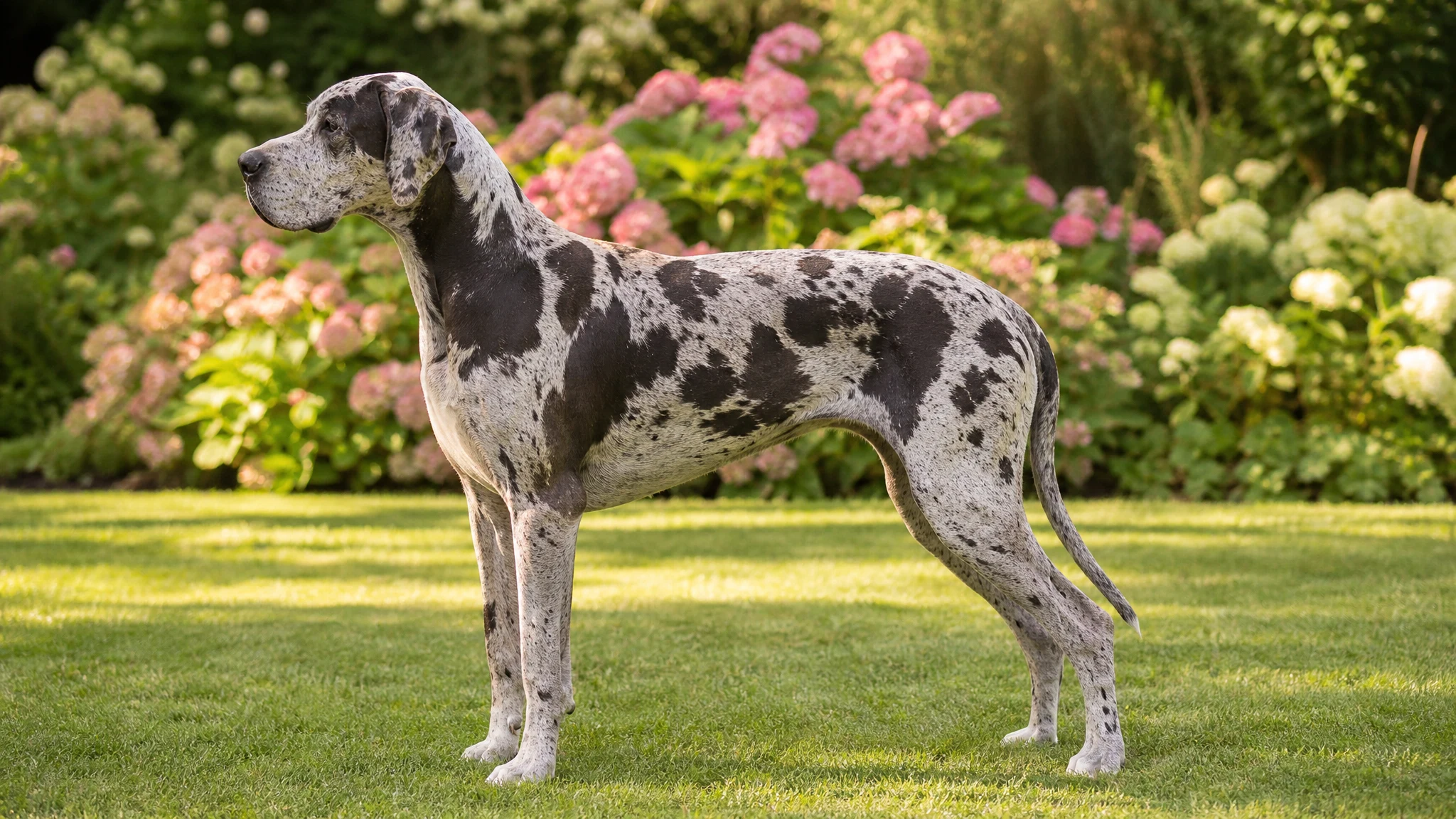
General nutrition information compiled from product labels and published sources, not veterinary advice. Your veterinarian is the right person to choose a diet for your dog, especially one with a health condition.
Protein and fat percentages are the first numbers most owners look at on a bag. They are also the easiest to misread. This guide shows you how to read them for a Great Dane, step by step, so you can judge the best Great Dane food for your own dog with a veterinarian.
A note on method: we compared label data published by each brand. We did not run feeding trials or taste tests, and nothing here is a ranking or a verdict on any food.
Why Great Danes need a closer look
PetMD lists adult Great Danes at an average of 110 to 175 pounds and 28 to 32 inches tall, with a typical life expectancy of 7 to 10 years. It also notes they grow very fast and advises large-breed puppy food until about 18 months.
The Great Dane Club of America (GDCA) health page names bloat, also called gastric dilatation-volvulus (GDV), as the number one killer of the breed. It also lists dilated cardiomyopathy (DCM), hip dysplasia, and the painful growth conditions HOD and panosteitis. Diet is one part of the picture for these concerns. No food prevents or treats them, and a veterinarian decides what suits an individual dog.
For the wider picture, see our guide to the diet factors that matter for Great Danes.
What you will need
- The bag, can or tray of the food you are considering, or the brand's own product page
- Your dog's age and current weight
- A calculator
- A measuring cup and a kitchen scale for portions
- Any notes from your veterinarian
Step 1: Confirm your dog's life stage
Start with age, because the right protein and fat level depends on it. PetMD puts adulthood at about 18 months for Great Danes. Brands draw their own lines. Royal Canin's Great Dane Adult formula is for purebred Great Danes 24 months and older, and its Giant Puppy formula is listed for giant-breed puppies up to 8 months.
If your dog falls between brand windows, ask your veterinarian when to switch rather than guessing.
Step 2: Find the AAFCO statement first
Before you read any percentage, find the sentence that begins with the Association of American Feed Control Officials (AAFCO) wording. For growing puppies, Whole Dog Journal explains that the statement must say whether the food suits growth including or except for large-size dogs, meaning 70 pounds or more as an adult. A Great Dane puppy needs the wording "including growth of large size dogs."
Some examples from brand pages:
- Royal Canin Giant Puppy states it meets AAFCO profiles for growth including growth of large size dogs.
- Victor Hi-Pro Plus Large Breed Puppy and Nom Nom Beef Mash state all life stages including growth of large size dogs.
- Freshpet Vital Large Breed is labeled for all life stages, but the wording we compared does not include the large-size growth phrase. Check with Freshpet before using it for a puppy.
If the statement does not clearly cover large-size growth, the percentages below do not matter for a puppy.
Step 3: Read the protein and fat minimums
On the label, protein and fat are listed as minimums. The real content can be higher. Here is what some brands publish, as fed:
| Food (brand page) | Protein min. | Fat min. | Calories per cup |
|---|---|---|---|
| Royal Canin Giant Puppy | 32% | 12% | 338 kcal |
| Victor Hi-Pro Plus Large Breed Puppy | 30% | 14% | 365 kcal |
| Royal Canin Great Dane Adult | 21% | 23% | 390 kcal |
| Royal Canin Giant Adult | 26% | 18% | 427 kcal |
| Victor Senior Healthy Weight | 27% | 11.5% | 360 kcal |
| Freshpet Vital Large Breed (fresh) | 20% | 14% | 337 kcal |
| Nom Nom Beef Mash (fresh) | 8% | 5% | 201 kcal |
The spread is wide. The Royal Canin Great Dane Adult formula is fairly low in protein and high in fat, while the Giant Puppy formula is the reverse. That is a reminder that no single protein or fat number defines the best Great Dane food.
Hill's Science Diet pages show averages on a dry matter basis, not minimums. For example, its Puppy Large Breed shows an average of 26.7% protein and 15.4% fat. Do not set those beside another brand's minimums as if they were the same kind of number.
Step 4: Compare on equal footing
Wet and fresh foods contain a lot of water, so their percentages look small. Nom Nom's 8% protein is not a weak food on that basis alone. It is a high-moisture food. To compare a fresh food with a kibble, convert both to dry matter, or ask the brand for dry matter values.
The basic method is to subtract the moisture percentage from 100, then divide the nutrient percentage by that result. Use the moisture figure printed on the label. If it is missing, check with the brand.
Step 5: Check calories and the feeding guide
Percentages say little about how much energy a cup holds. Royal Canin Giant Adult lists 427 kcal per cup, while Freshpet Vital Large Breed lists 337. The same cup of each gives a Great Dane quite different amounts of energy.
Treat every feeding chart as a starting point. Hill's pages say to adjust amounts to maintain optimal weight and to ask your veterinarian if unsure. Victor says to feed to maintain good body condition after age one. Weigh your dog regularly and adjust with your vet's guidance.
Step 6: Read the first ingredients
Ingredients are listed by weight. Compare the first five. Royal Canin Great Dane Adult begins with chicken fat, chicken by-product meal, tapioca, brewers rice and corn. Hill's Adult Large Breed begins with chicken, cracked pearled barley, brown rice, brewers rice and whole grain wheat.
Ingredient order tells you what the recipe is built from. It does not tell you how a food will work for your dog. Be wary of marketing words on the front of the bag. The statement and panel on the back carry the data.
Step 7: Plan meals around bloat risk
The GDCA says feeding multiple small meals and avoiding vigorous exercise around mealtimes may reduce bloat risk. It also describes a prophylactic gastropexy as an option to discuss with a vet. Royal Canin's Great Dane Adult page likewise advises giving the daily ration in at least two meals.
Split your dog's daily amount into at least two portions, and ask your veterinarian what schedule suits your dog.
Step 8: Take your shortlist to your veterinarian
Bring the labels or product pages. Ask about your dog's growth rate, body condition and heart health. On DCM, the FDA's most recent update on its investigation page is dated December 23, 2022. The FDA said it did not plan further public updates until there is meaningful new scientific information, and that no dietary cause has been established. The GDCA notes DCM is suspected to be inherited in the breed. So the diet question belongs in a conversation with your vet, not a label hunt alone.
Tips
- Switch foods gradually unless your veterinarian says otherwise.
- Keep the life stage match above all else. A good adult food is the wrong choice for a growing puppy.
- Write down the numbers for each food side by side. Seeing them in one place makes gaps obvious.
- Treats and toppers count toward daily calories.
Common mistakes
- Chasing the highest protein number. A higher figure is not automatically better for a growing giant breed.
- Comparing as-fed and dry matter numbers. This makes fresh and canned foods look weaker than they are.
- Skipping the AAFCO statement. It decides whether a puppy food suits large-size growth.
- Using calcium figures from a forum. Exact calcium targets for Great Dane puppies were not confirmed from a vet school or AAFCO source, so ask your veterinarian and the brand.
- Feeding one huge meal. Smaller, divided meals fit the GDCA's bloat guidance better.
- Buying supplements to fix a label. Ask your vet before adding anything.
What to expect
If you follow these steps, you should end up with a short, well-documented list of foods that match your dog's age and size. Over several weeks, a suitable food may be associated with steady body condition, healthy stools and consistent energy, though results vary from dog to dog.
Prescription diets are something only a veterinarian prescribes. If your dog has a health condition, follow your vet's plan rather than any label comparison.
You can also check each brand's own page for current label details: Royal Canin Great Dane Adult, Victor Hi-Pro Plus Large Breed Puppy and Hill's Science Diet Puppy Large Breed.
Sources
- Great Dane Club of America, Health page
- PetMD, Great Dane breed page
- FDA CVM, Investigation into Potential Link between Certain Diets and Canine DCM
- Whole Dog Journal, In the Fine Print: Nutritional Adequacy Statements
- Royal Canin, Giant Puppy
- Royal Canin, Giant Adult
- Hill's Pet Nutrition, Adult Large Breed
- Victor Pet Food, Senior Healthy Weight
- Freshpet, Vital Large Breed
- Nom Nom, Beef Mash