Helping an Underweight Great Dane Gain Weight: Diet Basics
General nutrition information compiled from product labels and published sources, not veterinary advice. Your veterinarian is the right person to choose a diet for your dog, especially one with a health condition.
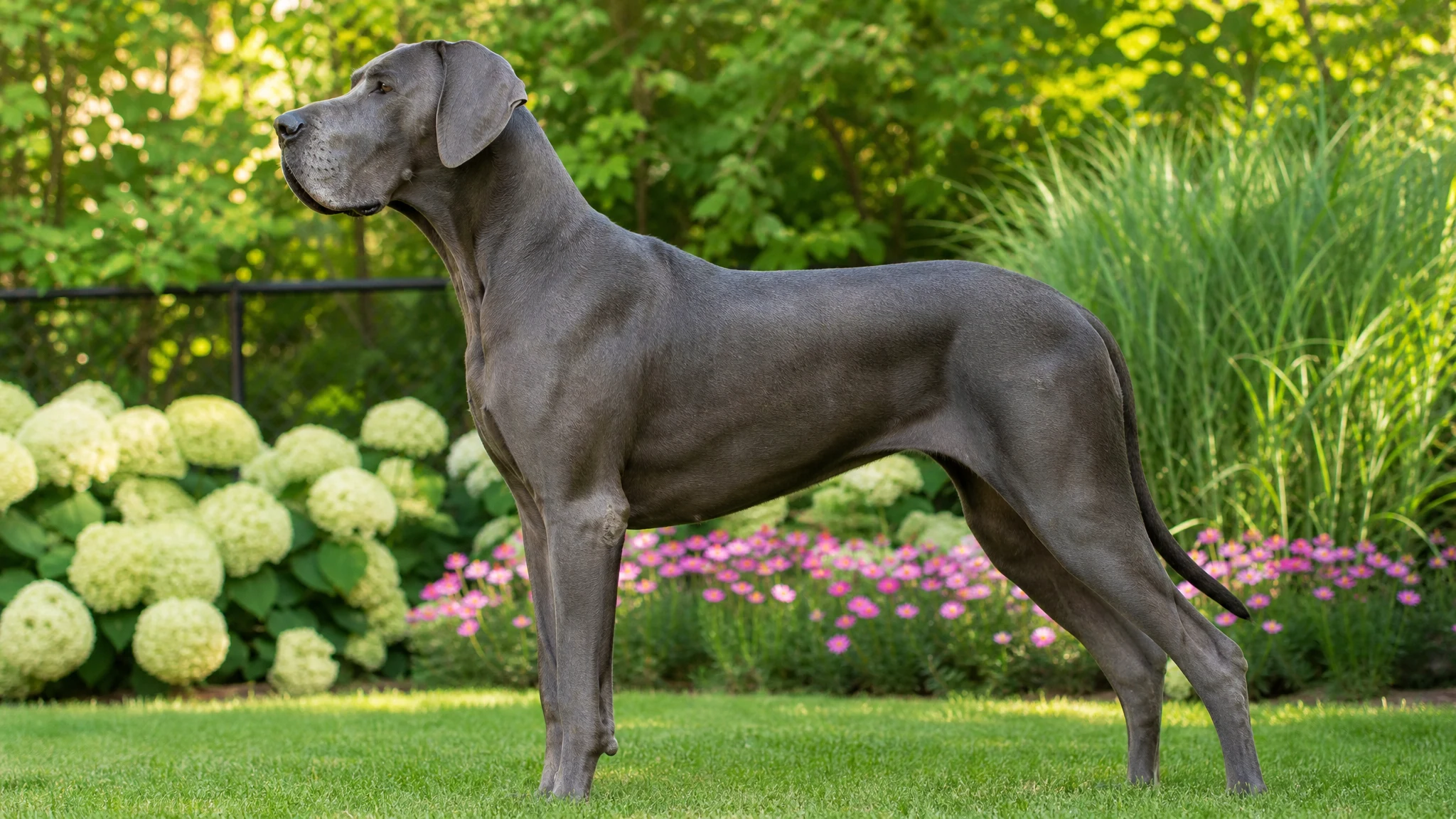
A Great Dane can look lean for many reasons. Some are normal for a giant, deep-chested dog. Others need a veterinarian's attention. This guide covers the diet side of the question: how to read labels, what to compare, and how to change meals without adding risk.
We compared label data from brand pages. We did not run feeding trials or taste tests, so nothing here is a ranking of how well a food works.
Before you change the food
Weight loss or a stubbornly thin frame is not always a feeding problem. Parasites, dental pain, stress and illness can all play a part. A veterinarian can confirm whether your dog is truly underweight and rule out medical causes. That visit also tells you how many pounds to aim for.
For context, PetMD, a secondary source, lists the average adult Great Dane at 110 to 175 pounds and 28 to 32 inches tall. That is a wide range, so your vet's body condition assessment matters more than a single number.
For a broader look at the breed's feeding needs, see Great Dane nutrition and the diet factors that matter.
What you need
- Your dog's current food bag, with its label
- A kitchen scale or a standard measuring cup
- A notebook or phone note for meals and weights
- Access to a scale that can weigh a giant dog (many vet clinics allow walk-in weigh-ins, but check with yours)
- Your vet's target weight and feeding advice
- A slow, safe way to feed two or more meals a day
Step-by-step: a careful plan for weight gain
1. Confirm the dog's life stage
Life stage decides which foods are even on the table. PetMD says a Great Dane is considered an adult at about 18 months and advises large-breed puppy food until then. No club or veterinary school source confirmed that exact age, so ask your vet.
The Great Dane Club of America (GDCA) health page describes hypertrophic osteodystrophy (HOD) and panosteitis as painful bone conditions of rapid puppy growth. It calls HOD the more serious of the two, and says it can be deadly. For a growing puppy, do not simply add calories. Ask your vet how to handle a thin puppy.
2. Check the AAFCO statement on the label
Every complete food carries a nutritional adequacy statement. Whole Dog Journal, a secondary source, explains that growth and all-life-stages labels must say whether they cover growth "including" or "except for" large-size dogs (70 pounds or more as an adult). A Great Dane puppy needs the "including" wording.
For adults, look for a maintenance statement or an all-life-stages statement that covers large-size growth. Be wary of any weight-management formula. For example, Victor's Senior Healthy Weight for Dogs is labeled for older, less active dogs or weight reduction, so it is not a natural fit for a dog that needs to gain.
3. Compare calories per cup, not just protein
Weight gain comes down to calories in versus calories out. Calories per cup is the most useful number on the label for this goal. Here is what the brand pages list for a few foods that suit a large or giant dog. The first two rows are dry foods for adults:
| Food | Label calories | Label notes |
|---|---|---|
| Royal Canin Giant Adult (dry) | 427 kcal ME per cup | 26% min protein, 18% min fat; maintenance statement |
| Royal Canin Breed Health Nutrition Great Dane Adult (dry) | 390 kcal ME per cup | 21% min protein, 23% min fat; for purebred Great Danes 24 months and older |
| Hill's Science Diet Adult Large Breed Chicken & Barley (dry) | 365 kcal per cup | Page lists averages, not guaranteed minimums |
| Victor Hi-Pro Plus Large Breed Puppy (dry) | 365 kcal per cup | 30% min protein, 14% min fat; all life stages including large-size growth |
| Freshpet Large Dog Multi-Protein Recipe (fresh) | 348 kcal per cup | Adult maintenance statement |
| Nom Nom Beef Mash (fresh) | 201 kcal per cup | All life stages including large-size growth |
These are label figures, not a verdict. A lower-calorie fresh food can still work if the volume fed is large enough, but a giant dog may need a lot of it. Dry foods with a higher calorie count let you feed less volume per meal, which matters for the next step.
4. Pick a food, then change it gradually
Any food on the list above could be a candidate to raise with your vet. None is a promise of weight gain. If you switch brands, mix the new food into the old over about a week, so the dog's stomach adjusts. Do not change several things at once. If you change the food, the amount and the schedule together, you will not know which one helped.
The best dog food for great dane to gain weight is the one that fits your dog's life stage, meets the AAFCO wording above, is calorie dense enough, and that your dog will eat consistently. Your vet makes the final call for an individual dog.
5. Use the label's feeding guide as a starting point
Feeding charts are starting points, not prescriptions. Hill's pages say to adjust amounts as needed to maintain optimal weight and to ask your veterinarian if unsure. Royal Canin's Giant Adult and Giant Puppy pages link to a feeding calculator rather than listing fixed amounts.
Some brands do give figures. Freshpet's Large Dog Multi-Protein page lists 3 1/2 cups per day for dogs 81 pounds and over, plus 3/4 cup for each additional 25 pounds over 80. Treat that as a first estimate. Then raise the amount in small steps only if your vet agrees and the dog's weight is not moving.
6. Split the daily amount into several small meals
This is the step that matters most for this breed. The GDCA health page calls bloat (gastric dilatation-volvulus, or GDV) the number one killer of Great Danes. It says that feeding multiple small meals and avoiding vigorous exercise around mealtimes may reduce risk. It also says a prophylactic gastropexy is an option to discuss with a vet.
The Royal Canin Great Dane Adult page makes a similar point: give the daily ration in at least two meals to help reduce the risks of gastric dilation-volvulus. Do not fix a thin dog by serving one huge bowl.
A practical plan is to divide the daily total into three or more portions. Keep the dog calm for a while before and after each one.
7. Track weight and body condition weekly
Weigh your dog at the same time each week, ideally on the same scale. Write down the weight, the food, the cups per day and any stool changes. Take a side photo too. Photos show change that numbers can hide.
Aim for slow, steady movement. If the weight does not budge after a few weeks, or the dog gets worse, go back to your vet rather than adding more food on your own.
Tips that help
- Feed in a quiet spot, away from other pets, so a nervous eater can finish.
- Warm water mixed into dry food can make it more appealing. Keep it a small amount and keep the meal small.
- Measure every meal. Eyeballing leads to drift.
- Keep treats modest and count them in the daily total.
- Stick to the same food long enough to judge it, rather than switching every week.
Common mistakes to avoid
- Feeding one large meal. This works against the bloat guidance above.
- Exercising hard right after eating. The GDCA advises avoiding vigorous exercise around mealtimes.
- Pushing a puppy to grow faster. Rapid growth is when the painful bone conditions in the GDCA health page occur. Ask your vet first.
- Adding supplements or toppers on your own. Stick with the complete food unless your vet suggests otherwise.
- Choosing a food by marketing alone. Phrases like "premium" or "natural" are not nutrient guarantees. Read the adequacy statement, ingredient list and calories.
- Assuming the dog's diet explains everything. A medical cause may be at work.
A note on the heart and grain-free diets
Dilated cardiomyopathy (DCM) is a real concern in the breed. The GDCA health page says it is suspected to be inherited, and that a normal echocardiogram does not guarantee the disease will not develop later. The FDA's page on diet and DCM says no dietary cause has been established. Its June 2019 update called the issue complex and possibly multifactorial. The latest update on that page is dated December 23, 2022, and the FDA said it would not release further public updates until there is meaningful new scientific information.
No food here is claimed to prevent or treat any heart condition. Diet questions tied to the heart belong with your vet. The products named above are not listed as grain free on their label data, though grain-free status was not confirmed for the Freshpet and Nom Nom recipes, so check those brands directly.
What to expect
With a well-matched food, steady meals and your vet's guidance, many underweight dogs gradually improve in condition. You may notice a better coat, a little more padding over the ribs and steadier energy. Results vary by dog, and giant breeds can take time. Some dogs will not gain until an underlying issue is found. Do not expect quick change, and do not judge the plan by the first week.
If your dog is not gaining, refuses meals, vomits, or has diarrhea, call your vet. If the belly looks swollen, or the dog is retching without producing anything, treat that as an emergency.
Sources
- Great Dane Club of America, Health page
- PetMD, Great Dane breed page
- FDA CVM, Investigation into Potential Link between Certain Diets and Canine DCM
- Whole Dog Journal, In the Fine Print: Nutritional Adequacy Statements
- Royal Canin, Great Dane Adult
- Royal Canin, Giant Adult
- Hill's Science Diet, Adult Large Breed
- Victor, Hi-Pro Plus Large Breed Puppy
- Freshpet, Large Dog Multi-Protein Recipe
- Nom Nom, Beef Mash