What Is the Best Dog Food for a Great Dane's Digestion
General nutrition information compiled from product labels and published sources, not veterinary advice. Your veterinarian is the right person to choose a diet for your dog, especially one with a health condition.
Owners often ask what is the best dog food for a great dane when the dog has loose stools, gulps meals or seems uneasy after eating. No single bag answers that for every dog. What you can do is read labels carefully, feed in a way that suits a deep-chested giant, and change foods slowly.
This guide walks through that process in steps. We compared label data published by the brands. We did not run feeding trials or taste tests, and nothing here says a food will fix a digestive problem. A veterinarian decides what is right for an individual dog.
Why digestion matters more in a giant breed
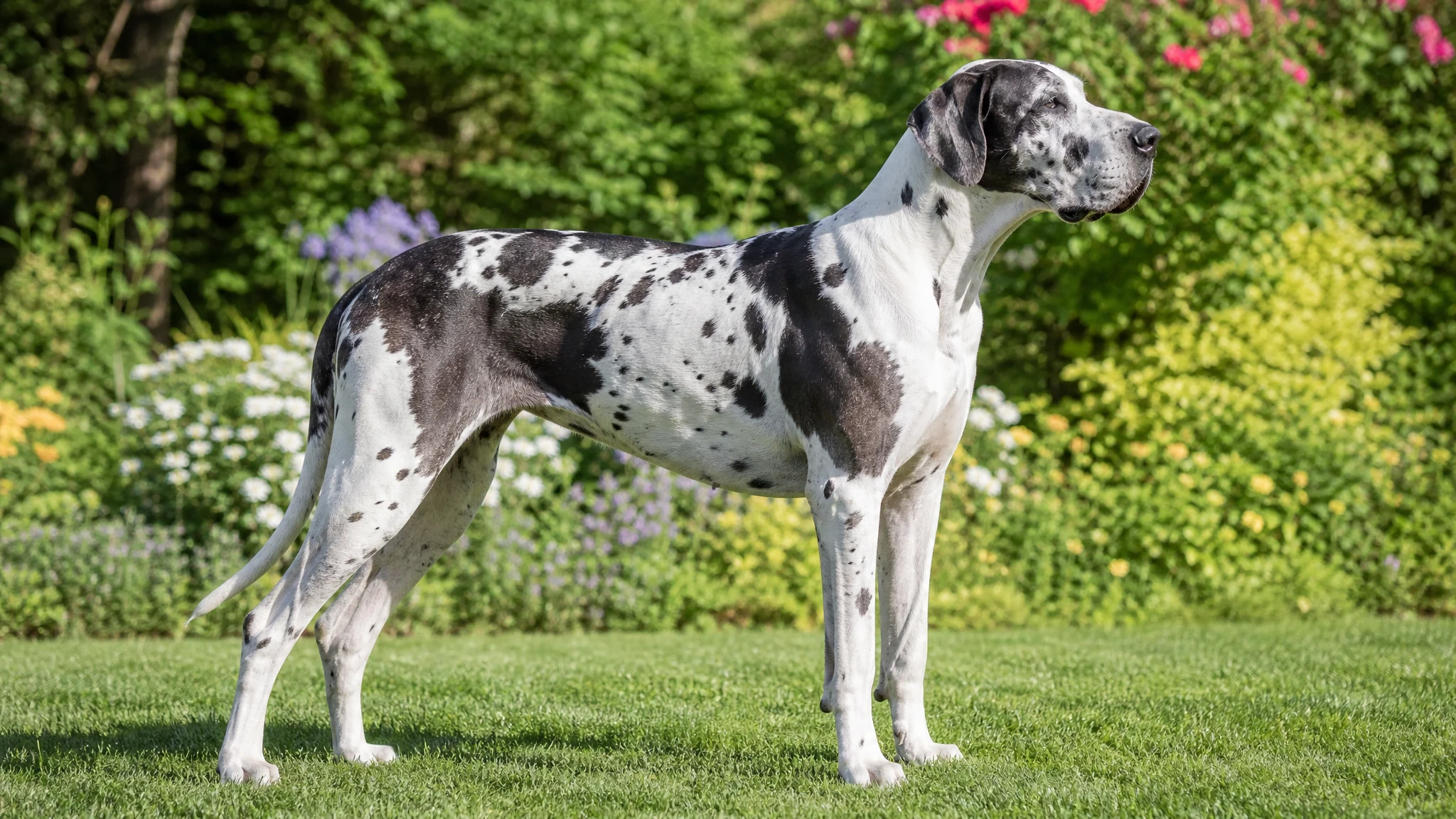
PetMD lists the Great Dane as a giant breed, with adults averaging 110 to 175 pounds and standing 28 to 32 inches tall. That is a lot of dog to feed, and the biggest digestive worry is bloat.
The Great Dane Club of America (GDCA) health page calls bloat, also known as gastric dilatation-volvulus (GDV), the number one killer of the breed. The GDCA says feeding several small meals and avoiding vigorous exercise around mealtimes may reduce risk. It also lists prophylactic gastropexy as an option to discuss with your vet.
So "best for digestion" here covers two things: the food itself, and how it is served. For a broader look at the topic, see Great Dane nutrition and the diet factors that matter.
What you need
- The current food bag or can, so you can read the full label.
- A measuring cup or kitchen scale.
- A notebook or phone notes for meals, stools and energy.
- Your veterinarian's phone number, for any ongoing digestive signs.
- A slow-feeder bowl, if your dog eats fast. This is optional.
Step 1: Match the food to your dog's life stage
Start with the AAFCO nutritional adequacy statement on the label. For puppies, this is the most important line.
Whole Dog Journal explains that growth and all-life-stages labels must say whether the food suits growth "including" or "except for" large-size dogs, meaning 70 pounds or more as an adult. A Great Dane puppy needs a statement that says "including growth of large-size dogs." Whole Dog Journal is a secondary source, so confirm the wording on the bag itself.
PetMD says Great Danes grow very fast and advises large-breed puppy food until about 18 months. The GDCA also warns about painful bone conditions during rapid growth, including hypertrophic osteodystrophy (HOD) and panosteitis. Ask your vet how to pace growth and which calcium level suits your puppy. We could not confirm exact calcium figures from AAFCO or a vet school, so we give none.
Some labels worth reading as examples:
- Royal Canin Giant Puppy states it meets AAFCO profiles for growth including growth of large-size dogs.
- Victor Hi-Pro Plus Large Breed Puppy and Nom Nom Beef Mash both state all life stages, including growth of large-size dogs.
- The Hill's Science Diet Puppy Large Breed Chicken & Brown Rice statement we found says "growing puppies" without the large-size wording. Check the current bag or ask Hill's before relying on it for a Dane puppy.
Step 2: Read the label data side by side
Ingredient lists are ordered by weight, and marketing words on the front of a bag do not change the nutrient panel. Put two or three candidate foods next to each other and compare the same things each time.
| Food (brand page data) | Stage | Protein min / fat min / fiber max | Calories |
|---|---|---|---|
| Royal Canin Great Dane Adult (dry) | Adult, purebred Danes 24 months and older | 21% / 23% / 4.2% | 390 kcal per cup |
| Royal Canin Giant Adult (dry) | Adult giant breed | 26% / 18% / 3.9% | 427 kcal per cup |
| Royal Canin Giant Puppy (dry) | Giant puppies up to 8 months | 32% / 12% / 3.9% | 338 kcal per cup |
| Victor Hi-Pro Plus Large Breed Puppy (dry) | All life stages, including large-size growth | 30% / 14% / 6.0% | 365 kcal per cup |
| Hill's Science Diet Adult Large Breed (dry) | Adult, giant breeds 1 to 4 years | Page lists averages only (23.8% protein, 15% fat, 1.7% fiber, dry matter) | 365 kcal per cup |
Note that Hill's shows dry matter averages, not guaranteed minimums, so those numbers are not directly comparable to the others. Calories per cup also vary a lot, which matters when you measure portions.
The Royal Canin Great Dane Adult page describes a large, textured kibble designed for the breed's large jaw. Kibble size for the other dry foods above was not listed on the pages we checked, so ask the brand.
Step 3: Pick a feeding schedule that respects bloat risk
Divide the daily ration into at least two meals, and consider three for a young dog. The Royal Canin Great Dane Adult page says the daily ration should be given in at least two meals to help reduce the risks of gastric dilation-volvulus. The GDCA likewise points to multiple small meals.
Keep exercise calm for a while before and after eating. If your dog bolts food, a slow-feeder bowl is a reasonable tool to discuss with your vet. Fresh foods such as Freshpet say on their pages that portions can be fed once daily or split into two, so choose the split option for a Dane.
Step 4: Start from the label's feeding guide
Treat every feeding chart as a starting point. Hill's says to adjust amounts to maintain optimal weight and to ask your veterinarian if unsure. Nom Nom describes its recommendations as a guide that varies with age, weight and activity. Victor says that after age one you should feed to maintain good body condition.
Weigh your dog every few weeks and watch body condition. A lean, steady puppy is easier on growing joints than a fast-gaining one, but your vet should set the target.
Step 5: Switch foods slowly
We found no breed-specific transition schedule in the sources we used, so ask your vet for one. The general idea is simple: mix a small amount of the new food into the old, and raise the share over about a week or more if stools stay normal.
- Keep the meal schedule and total calories the same.
- Replace a small portion of the old food with the new one.
- Increase the new portion only if stools stay firm and appetite is normal.
- Pause the change if you see vomiting, loose stool or low energy, and call your vet.
If the new food has a different calorie density, re-measure. A cup of Royal Canin Giant Adult at 427 kcal is not the same amount of energy as a cup of Royal Canin Giant Puppy at 338 kcal.
Step 6: Track results and talk to your vet
Write down meals, stool quality, gas, vomiting and energy for a few weeks. This record helps your vet far more than a vague impression.
Common mistakes to avoid
- Feeding one huge meal. This works against the GDCA's advice on smaller, more frequent meals.
- Exercising right after eating. The GDCA advises avoiding vigorous activity around mealtimes.
- Using a food that excludes large-size growth for a puppy. Check the AAFCO wording.
- Changing foods overnight. Abrupt switches make it hard to tell what is causing a reaction.
- Treating a label as medical advice. Prescription diets come only from a veterinarian.
- Chasing grain-free as a fix. The FDA's investigation into diets and canine dilated cardiomyopathy (DCM) has not established a dietary cause. Its last public update, dated December 23, 2022, said the issue is complex and may involve multiple factors. Talk to your vet before choosing on this basis.
What results to expect
A well-matched food and a steady routine may lead to more consistent stools and calmer mealtimes in some dogs. Results vary, and a food will not prevent bloat, treat DCM or cure any condition. The GDCA says a gastropexy is the option to discuss for bloat risk, and diet and feeding habits are only part of the picture.
If your Dane has repeated vomiting, a swollen or tight belly, unproductive retching or sudden restlessness, contact an emergency veterinarian immediately.
So, what is the best dog food for a Great Dane?
The best choice is a complete and balanced food for your dog's life stage, with a large-size growth statement for puppies, fed in several small meals and introduced slowly. Beyond that, your dog's own stool, weight and energy, read together with your vet's advice, decide the winner.
Sources
- Great Dane Club of America, Health page
- PetMD, Great Dane breed page
- Whole Dog Journal, In the Fine Print: Nutritional Adequacy Statements
- FDA CVM, Investigation into Potential Link between Certain Diets and Canine DCM
- Royal Canin, Great Dane Adult
- Royal Canin, Giant Puppy
- Royal Canin, Giant Adult
- Hill's Science Diet, Adult Large Breed
- Hill's Science Diet, Puppy Large Breed
- Victor, Hi-Pro Plus Large Breed Puppy
- Freshpet, Large Dog Multi-Protein Recipe
- Nom Nom, Beef Mash